News
Winter sports sustainability moves from guidelines to practice – White Winters and FIS launch pilot in Finland
by Solved, Jun 25th 2026
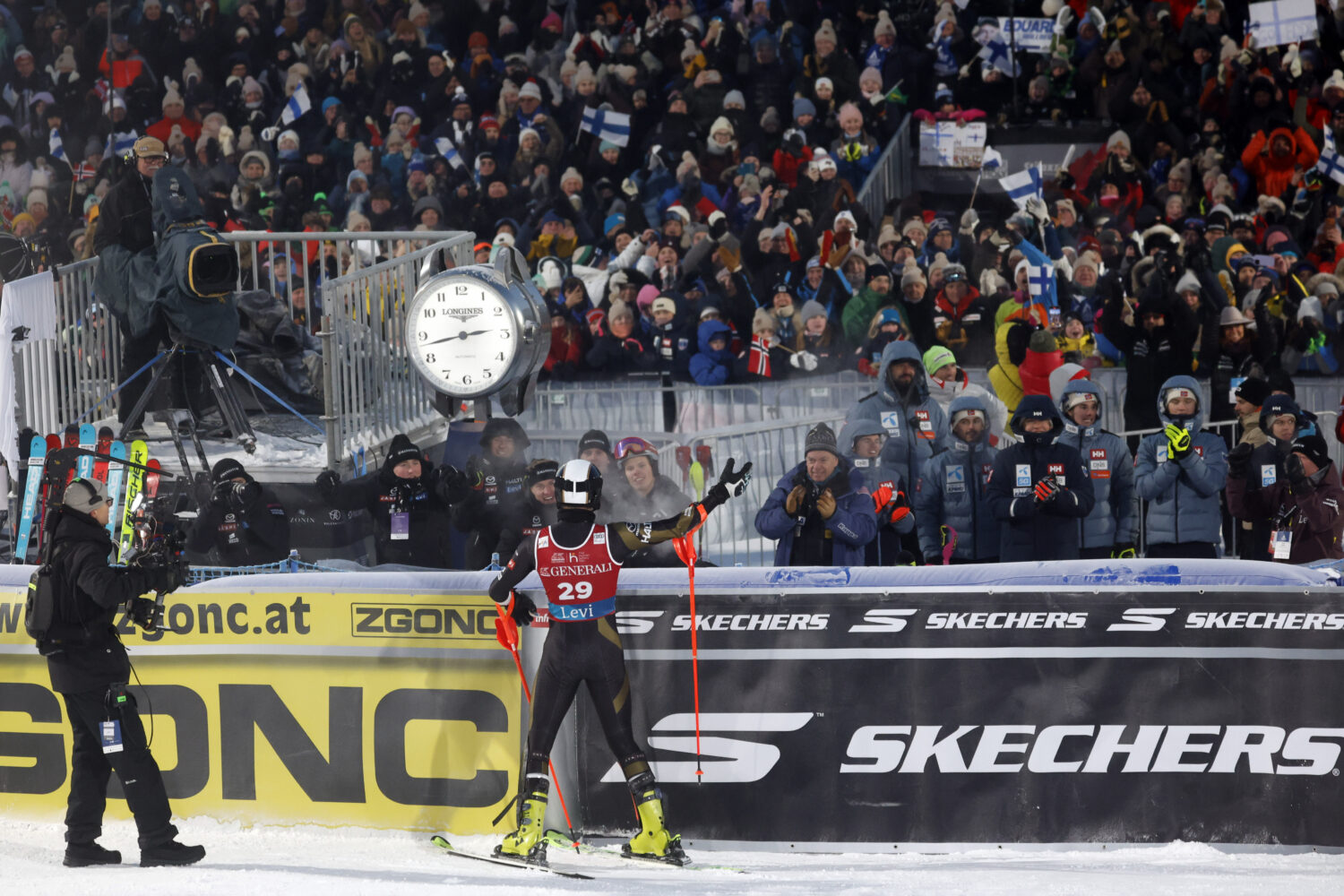
Eduard Hallberg of Team Finland takes third place during the Audi FIS Alpine Ski World Cup Men’s Slalom in Levi, Finland, on 16 November 2025. Photo: Christophe Pallot / Agence Zoom.
White Winters and FIS are developing a new tool to help winter sports events make better decisions on procurement, energy use and logistics. The pilot project begins in Finland in summer 2026.
Together with FIS (International Ski and Snowboard Federation), White Winters is launching the FIS White Winters Online Platform project to bring sustainability more closely into the planning, procurement and delivery of winter sports events.
The project will create an easy-to-use platform that brings together FIS sustainable procurement guidance, emissions calculation tools, practices already tested at events, and independently assessed suppliers and solutions.
The goal is to help events reduce their environmental impact and make proven solutions easier to adopt across international event settings.
The work is based on the FIS Sustainable Procurement Guide for Snow Sports Events and the FIS CO₂ Calculator. Together, these tools help event organisers identify where the biggest impacts arise and which procurement decisions can help reduce them.
According to Susanna Sieff, FIS Sustainability Director, procurement decisions play a major role in the environmental footprint of winter sports events.
“The White Winters platform makes emissions reductions more practical. It gives event organisers access to assessed solutions, suppliers and operating models in the areas where the impacts are greatest,” says Sieff.
Emissions data and solutions in one place
Large winter sports events involve constant decisions on infrastructure, transport, logistics, energy use, snow management, catering and temporary event structures. The platform has been designed to support these decisions.
The aim is for sustainability not to remain a separate report after an event, but to be visible in what is purchased, who it is purchased from, and the criteria used to make decisions.
The White Winters platform brings procurement processes, emissions calculations and assessed sustainability solutions into one place. This makes responsible choices easier to include in everyday event planning and delivery.
Pilot phase begins in Finland
The pilot phase will start in Finland in summer 2026 in cooperation with key winter sports organisations. Participants include the Finnish Ski Association, Ski Sport Finland, Ruka Nordic, Levi World Cup, Lahti Ski Games, and the Levi, Ruka and Pyhä ski resorts.
Finland will serve as a testing ground for a model that can later be used elsewhere in Europe, North America and Asia.
All suppliers and solutions accepted onto the platform will go through an independent expert assessment. The review process examines environmental impacts, reliability in top-level sporting events, and the suitability of solutions across different regions and operating conditions.
The platform is not intended to be just another directory. It is designed as a practical tool to support event decision-making.
Three tools for event organisers
The platform consists of three parts:
- Sustainable Procurement Hub turns FIS guidelines into practical procurement tools for event organisers.
- Best Practices Library brings together solutions that have already been tested in winter sports events.
- Supplier & Solutions Directory presents assessed partners, technologies and service providers.
Sustainability must not remain a report
Marleena Valtasola, Executive Director of the Finnish Ski Association, highlights the importance of the pilot phase for practical implementation.
“The pilot is an important step in bringing sustainability from strategy into the everyday reality of events. It enables faster, evidence-based decisions based on assessed data and practical solutions,” says Valtasola.
According to White Winters Programme Director Santtu Hulkkonen, a large share of the environmental impact of events comes from procurement, mobility and temporary infrastructure solutions.
“When emissions data and assessed solutions are available in the same place, event organisers do not need to start every decision from scratch. Sustainability can become part of everyday decision-making,” says Hulkkonen.
Janne Leskinen, CEO of Ski Sport Finland and Secretary General of the Levi World Cup, says that White Winters has had the same objective from the beginning: to speed up the adoption of the best available solutions in winter sports.
“Our goal has always been for White Winters to help bring the best solutions into use more quickly across winter sports. If successful, the project can have significant impact internationally, create new opportunities for solution providers, and offer a model for other sports facing similar challenges,” says Leskinen.
The long-term goal is to build a shared operating model for winter sports so that event impacts can be measured, compared and reduced internationally.
Future events will not depend on snow and high-quality sport alone. They will also be shaped by smarter decisions made behind the scenes.

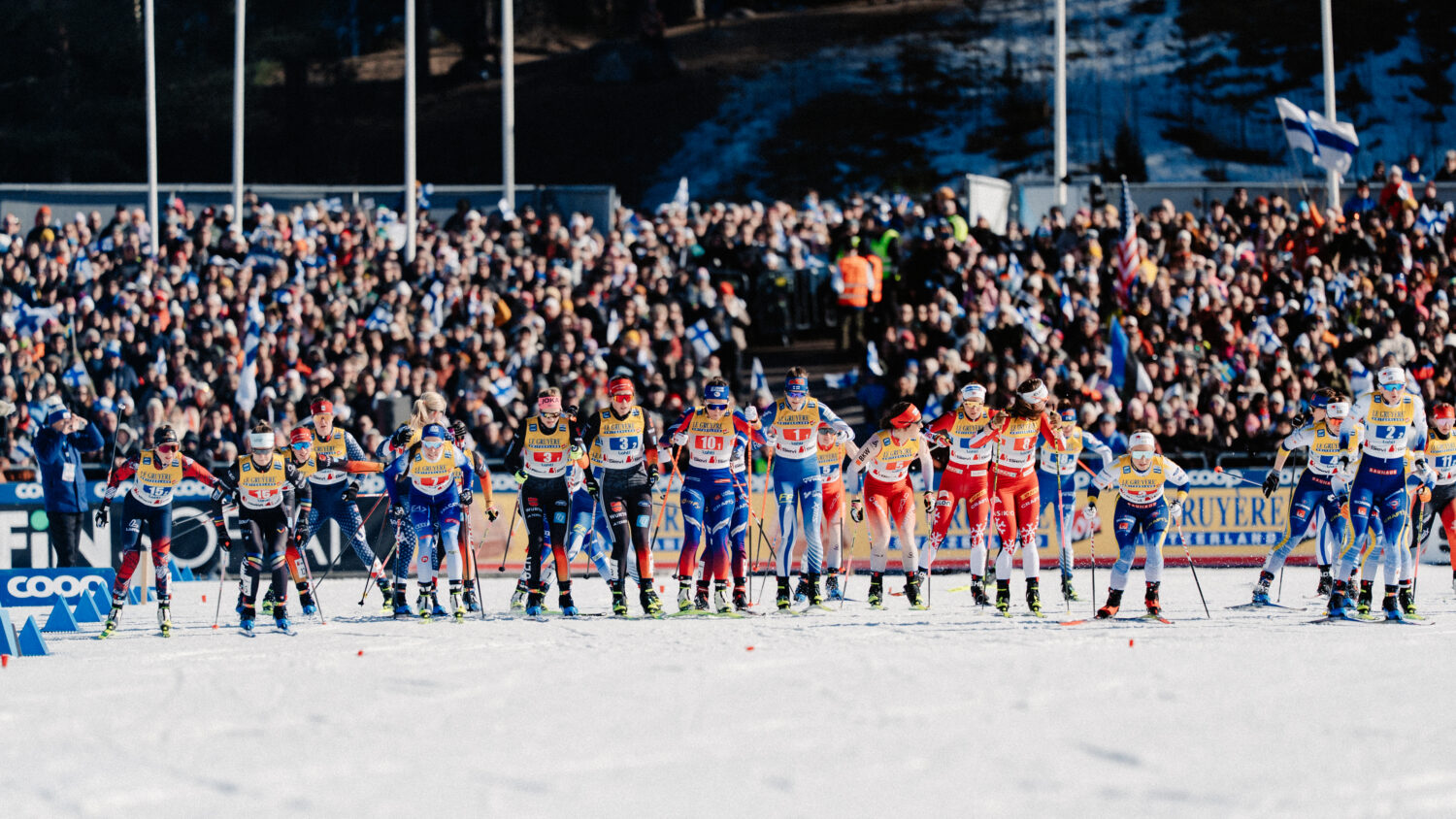
Team sprint at the Lahti Ski Games. Photo: Finnish Ski Association / Jesse Väänänen. 
Lahti Ski Games. Photo: Finnish Ski Association / Jesse Väänänen.
Contact information:
Susanna Sieff, Sustainability Director, FIS, [email protected] | +39 347 772 4735
Marleena Valtasola, Executive Director, Finnish Ski Association, [email protected] | +358 50 401 4416
Janne Leskinen, Managing Director, Ski Sport Finland, [email protected] | +358 400 300 930
Santtu Hulkkonen, CEO, Solved | Programme Director, White Winters | Sustainability Advisor for Lahti Ski Games & Ruka Nordic, [email protected] | +358 50 373 2895
More information: